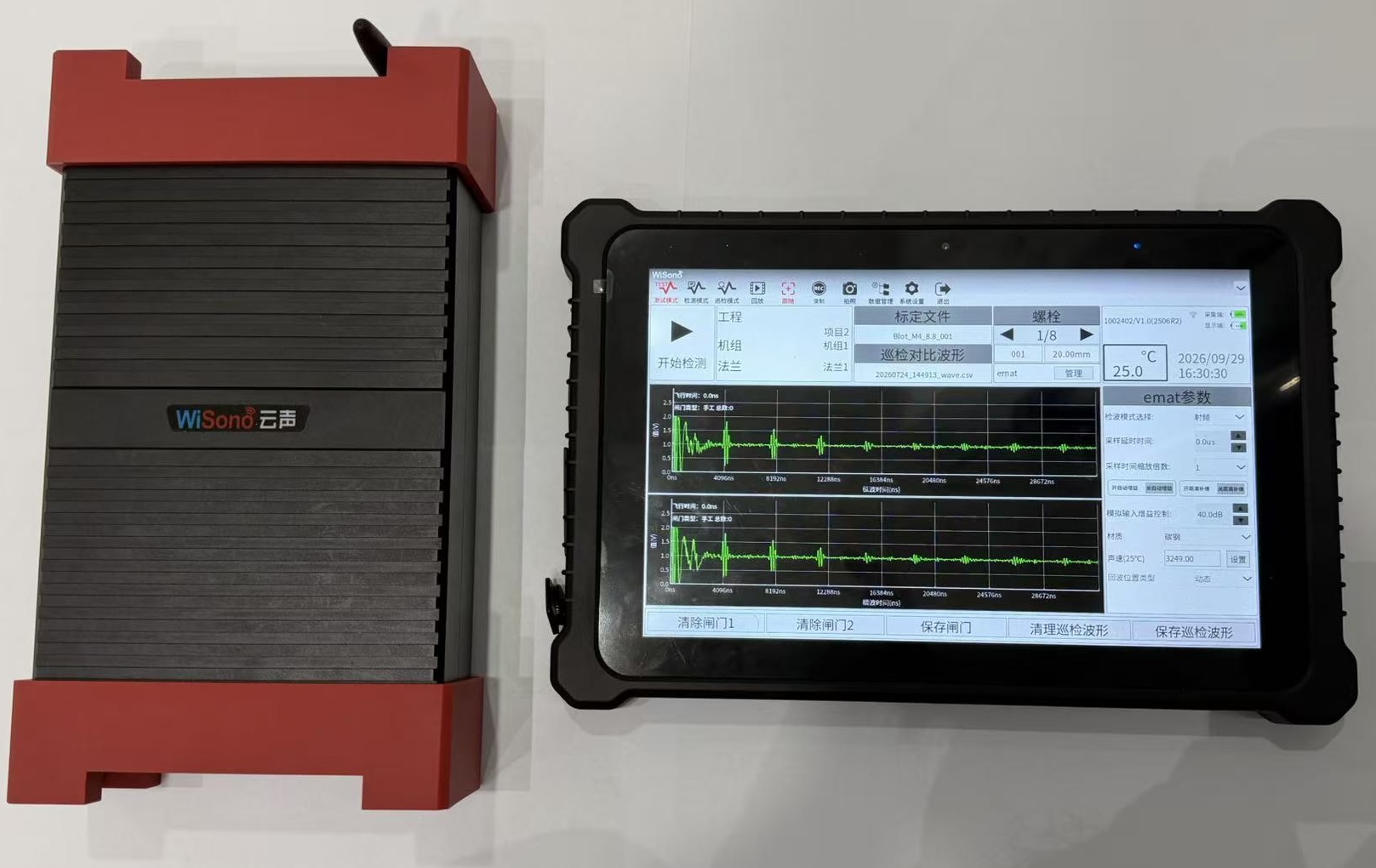
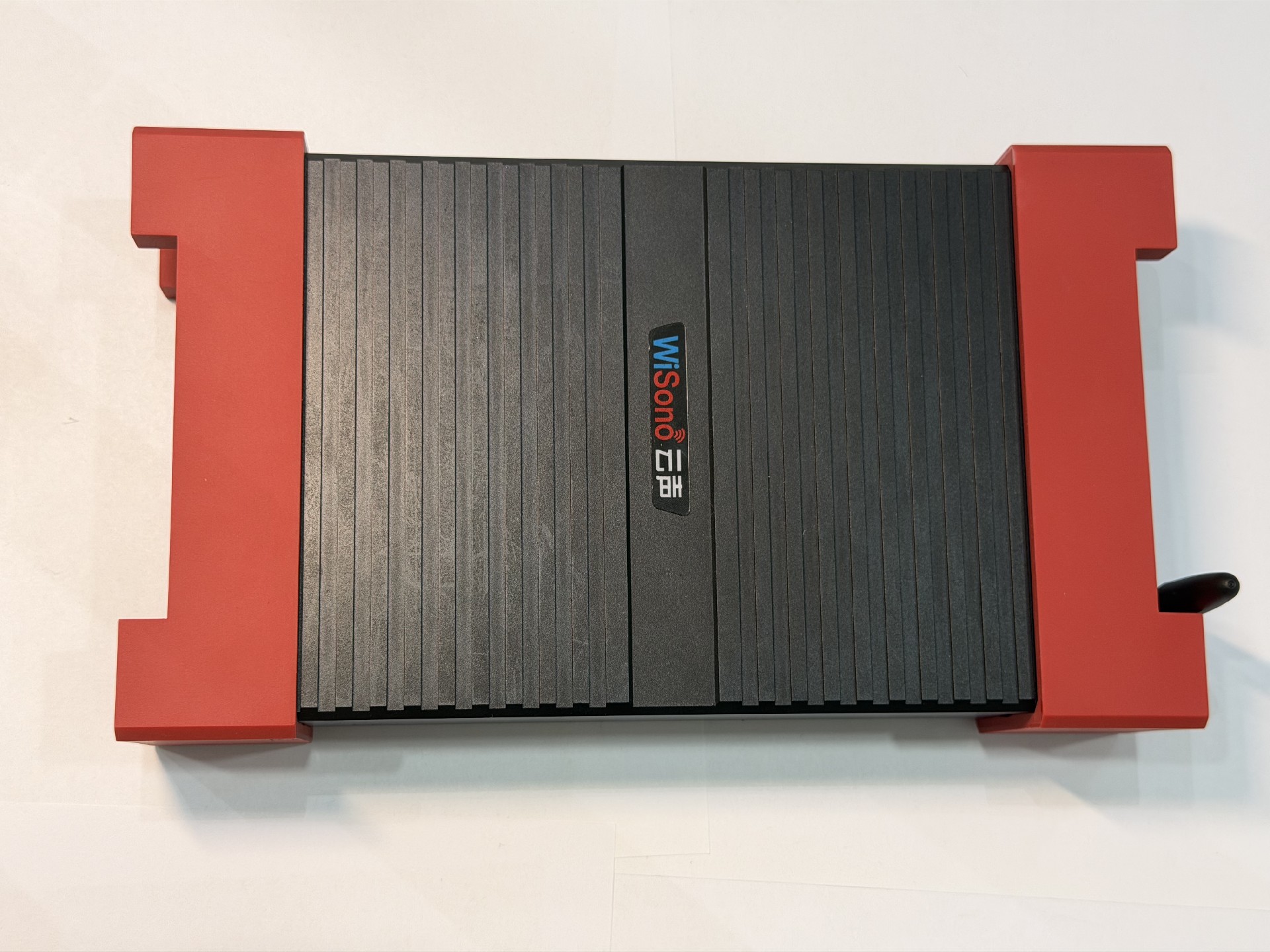
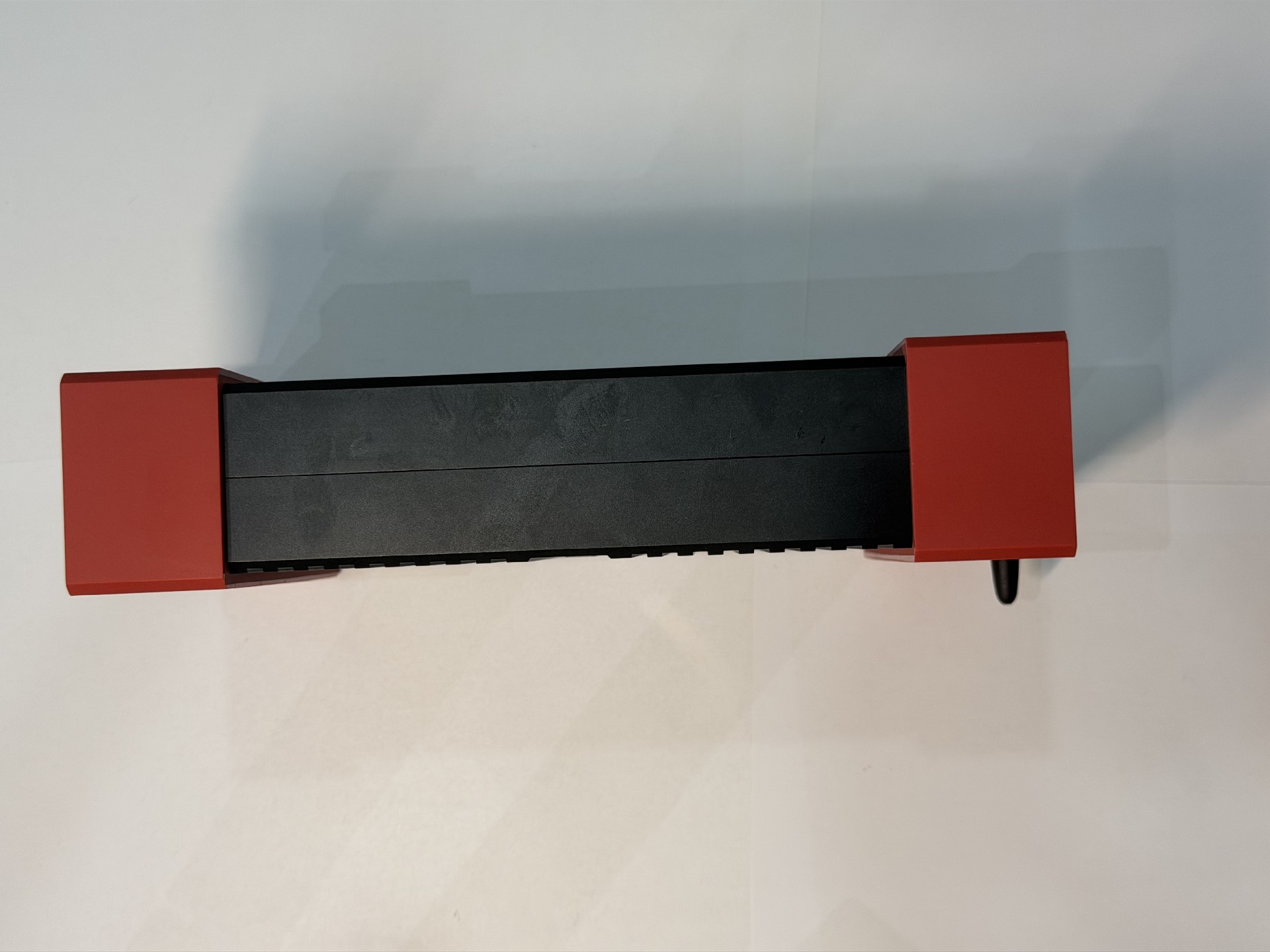
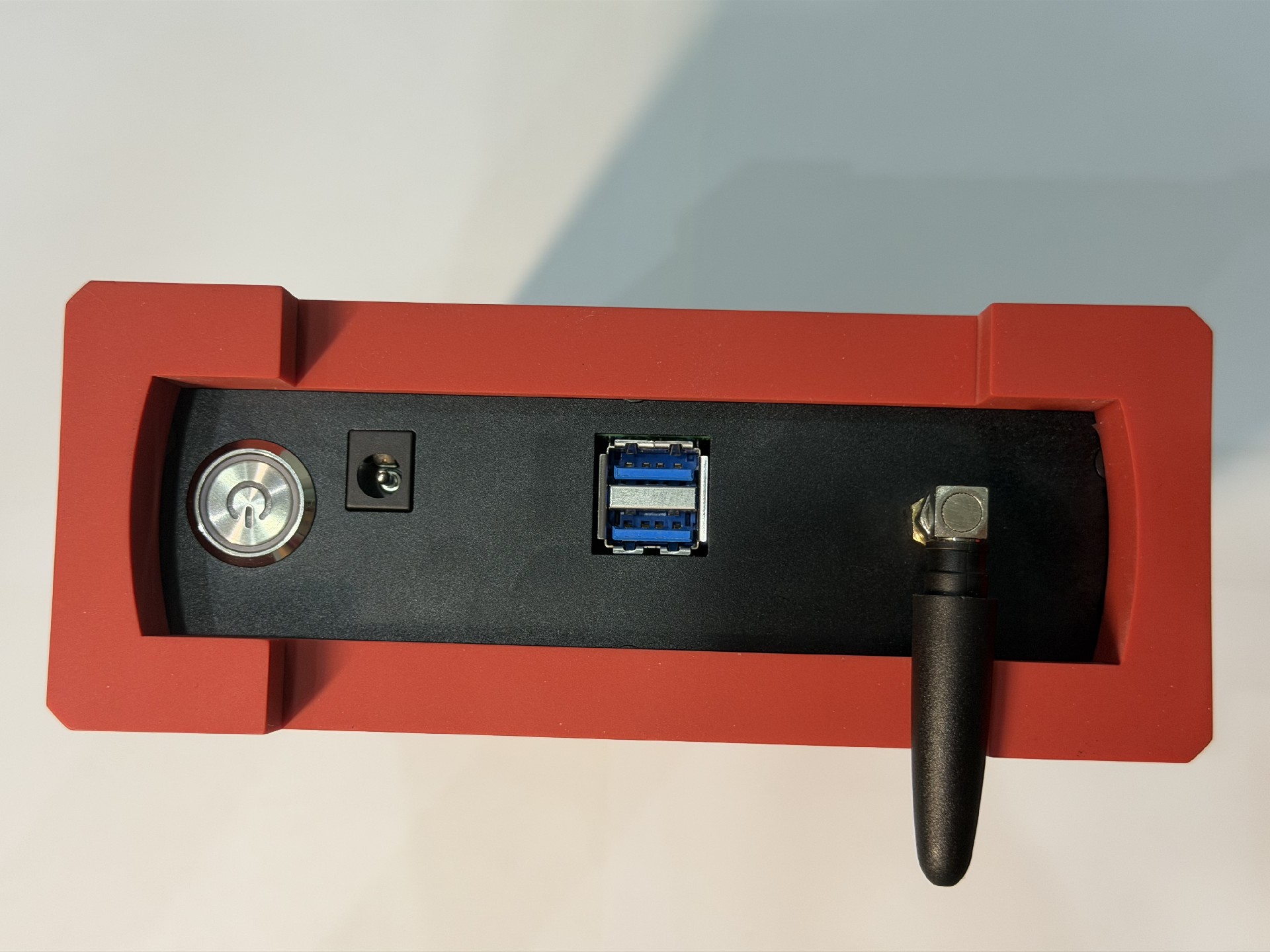
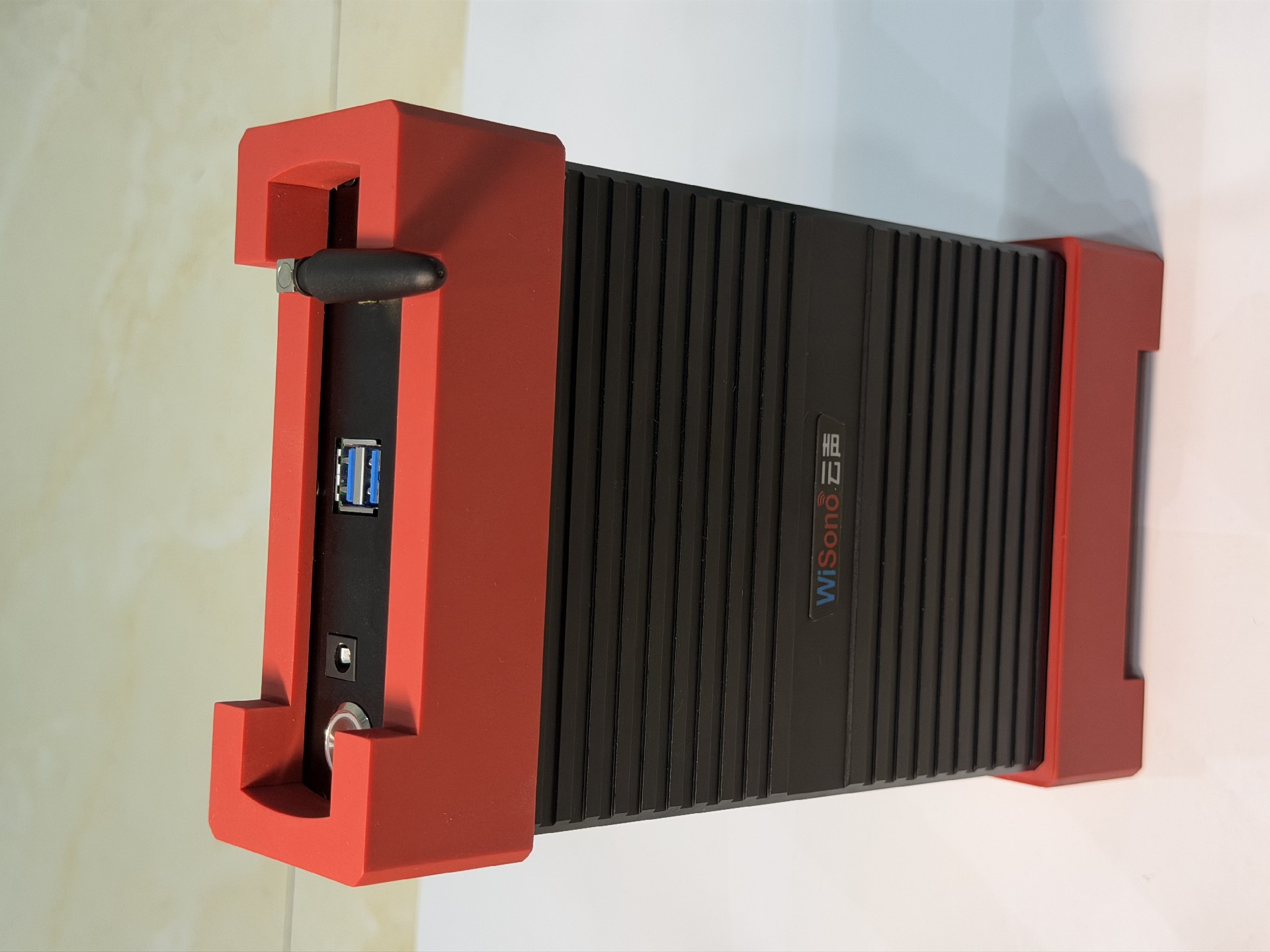
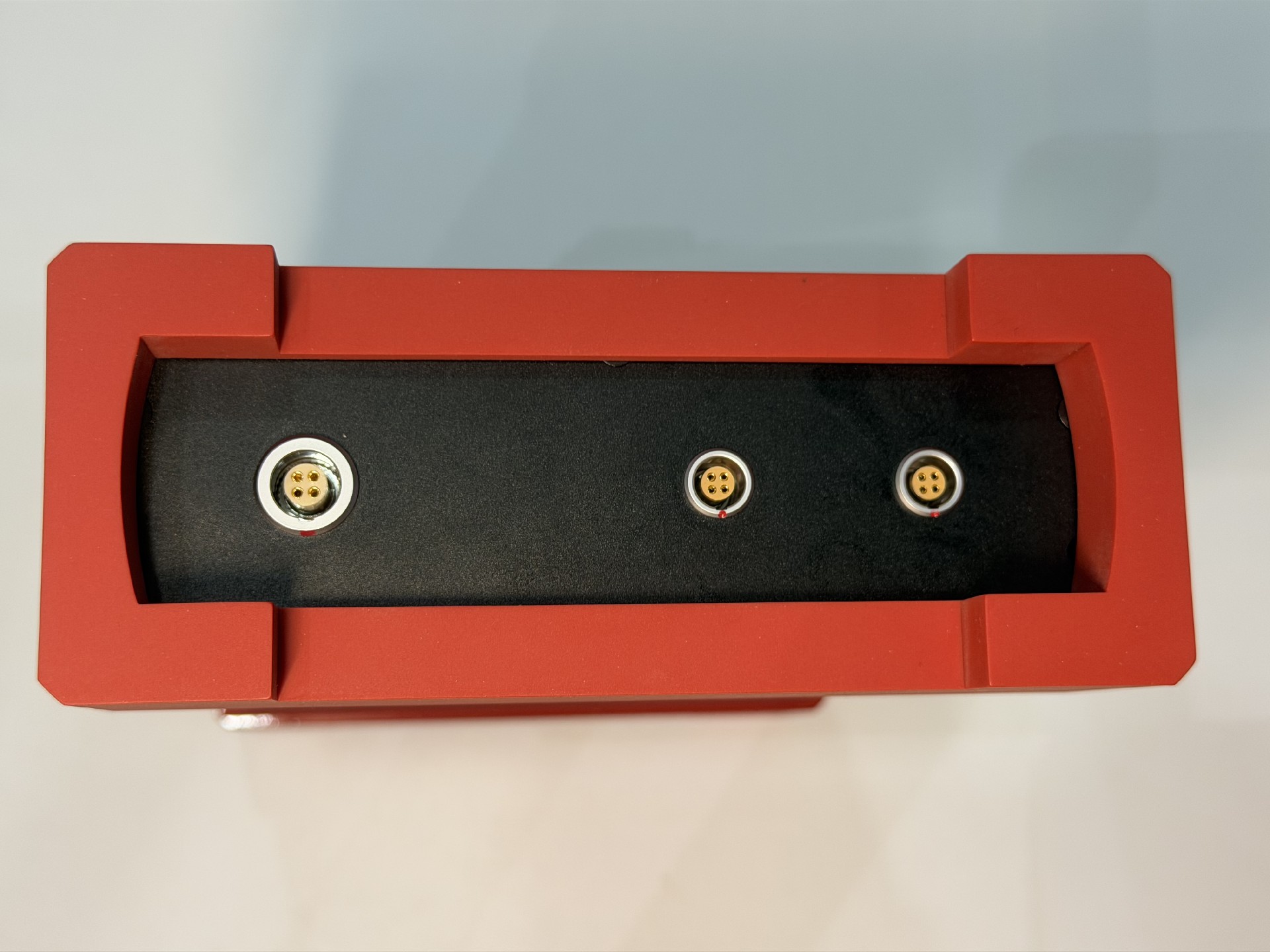
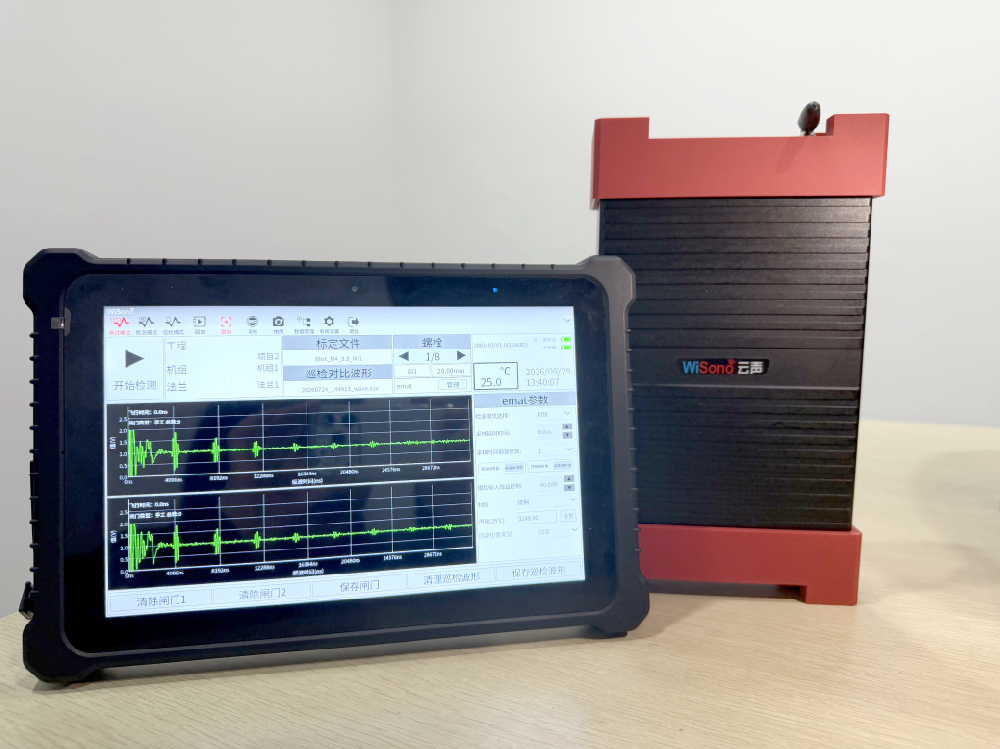
I. Technical Parameters
| Parameter Item | Indicator |
| Function Position | Stress Value Detection of Bolts |
| Channel Number | Single Channel |
| Receiving Frequency Bandwidth | 2 MHz - 8 MHz |
| Digital Sampling Rate | 8 bit / 1 GSPS |
| Sampling Depth | 16K, 32K, 64K, 128K selectable |
| Repetition Frequency | 7.5 Hz / 15 Hz / 30 Hz |
| Gain Range | 0 - 80 dB adjustable, accuracy 0.1 dB |
| Detection Mode | Positive, Negative, Full Detection, and RF |
| Detection Range | > 300 mm |
| Operating Temperature | 0℃ - +45℃ |
| Storage Temperature | -20℃ - +50℃ |
Features: Large single sampling depth, multi-point sampling of 16K - 128K can better find target echoes, suitable for long bolts and complex echo conditions for stress detection.
II. Application Scenarios
1. Non-contact on-site detection: EMAT sensor does not have mechanical contact with the bolt surface, no need for coupling agent,
allowing detachment, avoiding measurement errors caused by changes in contact pressure. Higher measurement accuracy; even if
the bolt surface is rusty, oxidized layer or coating, it can be directly measured, eliminating the need for grinding and cleaning procedures,
especially suitable for on-site inspection in restricted working conditions such as high-altitude and outdoor environments.
2. Accurate measurement in temperature-changing environments: Using longitudinal wave and transverse wave dual-wave measurement method,
the influence of temperature change on the two waveforms' sound time is the same. Through the difference in the sound times of the two waves,
the temperature influence can be eliminated without temperature compensation, suitable for scenarios with large diurnal temperature differences and
uneven sunlight in wind farms and outdoor steel structures.
3. Direct measurement of load without original length: Dual-wave technology can complete load/stress measurement without knowing the original
length of the bolt. It is particularly applicable to bolts that have been in service for many years, have no original length records, or cannot be measured
for free length. The supporting software directly outputs stress readings (MPa), allowing on-site measurement and reading immediately.
4. Non-planar end face bolt detection: The sensor does not have mechanical contact with the measured surface. It can still measure bolts
with uneven heads or bottoms, end face tilting, or rough processing. It is not limited by the quality of end face processing.
5. Wheel-rail, sheet metal, etc. stress detection: In addition to bolts, it can also be used for stress/load measurement of metal components such as train
wheels, rails, and steel plates, providing non-destructive testing methods for the rail transportation and equipment manufacturing industries.
6. High-strength bolt construction and in-service detection: Applicable to the pre-tightening stress detection, tightening process verification,
and in-service loosening detection of high-strength bolts in industries such as steel structures, buildings, power, petrochemicals, and wind power;
16K - 128K multi-level sampling depth, large single sampling depth, can accurately capture target echoes in complex bolt structures and situations
with many interfering echoes.
7. Laboratory calibration and research testing: 1 GSPS digital sampling rate and 0.1 dB gain accuracy meet the calibration test and process research
requirements for bolt stress detection.